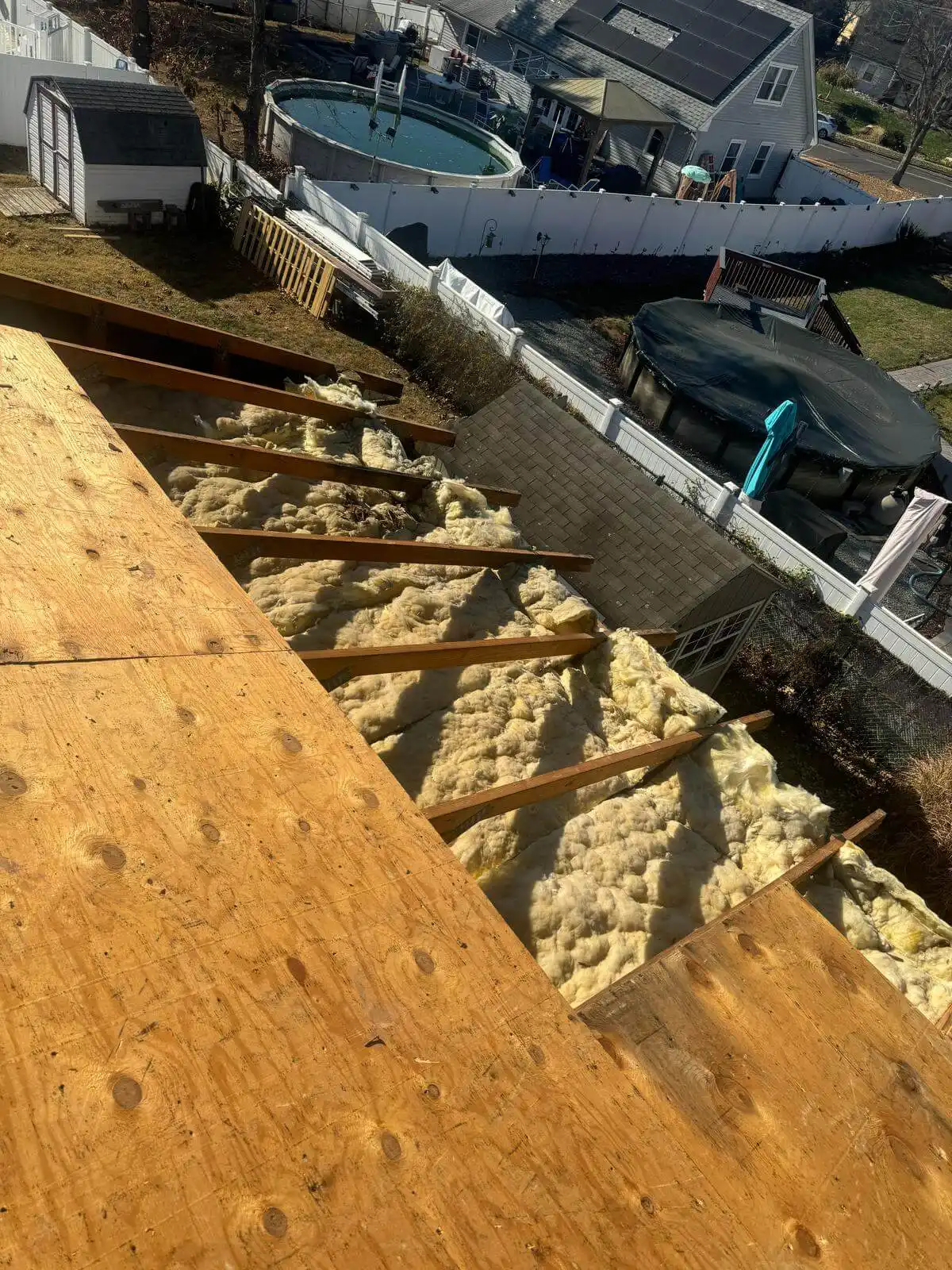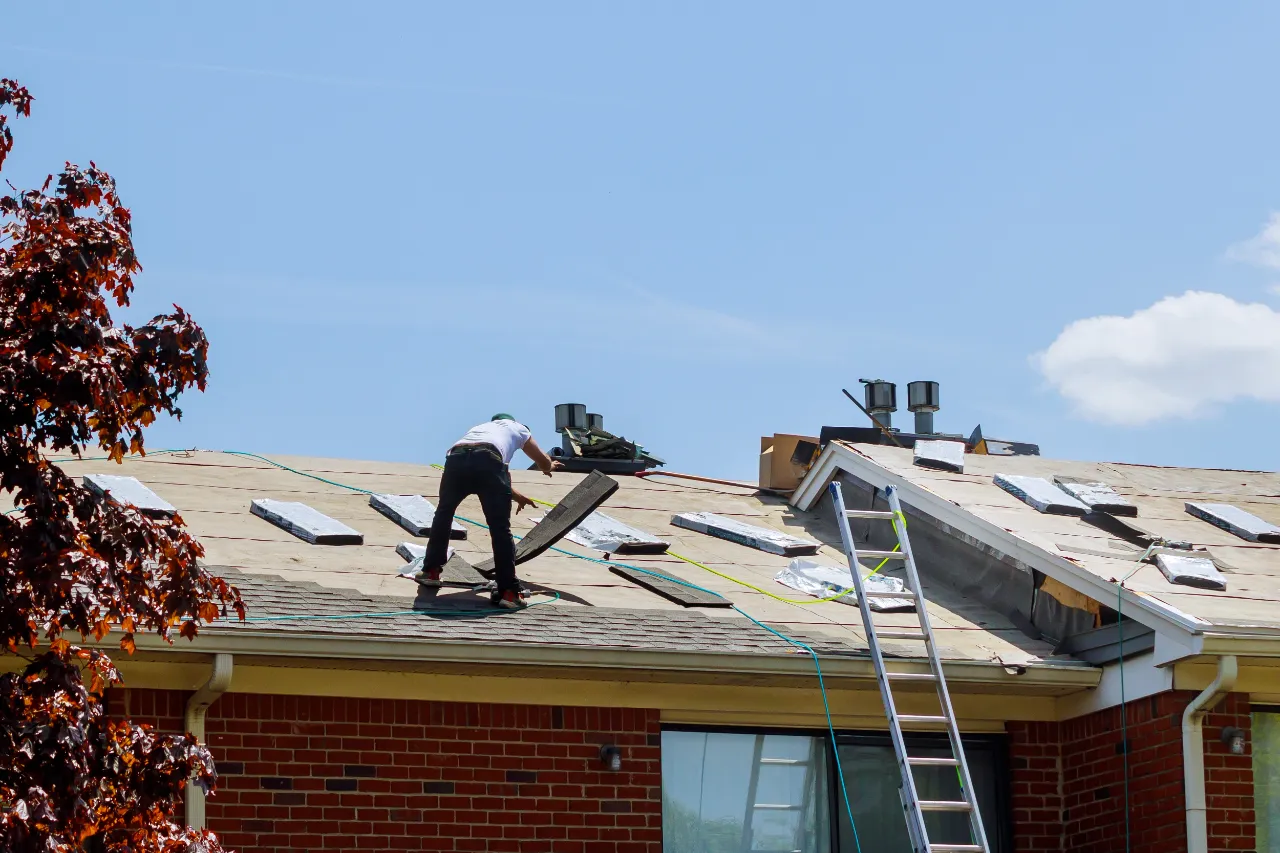
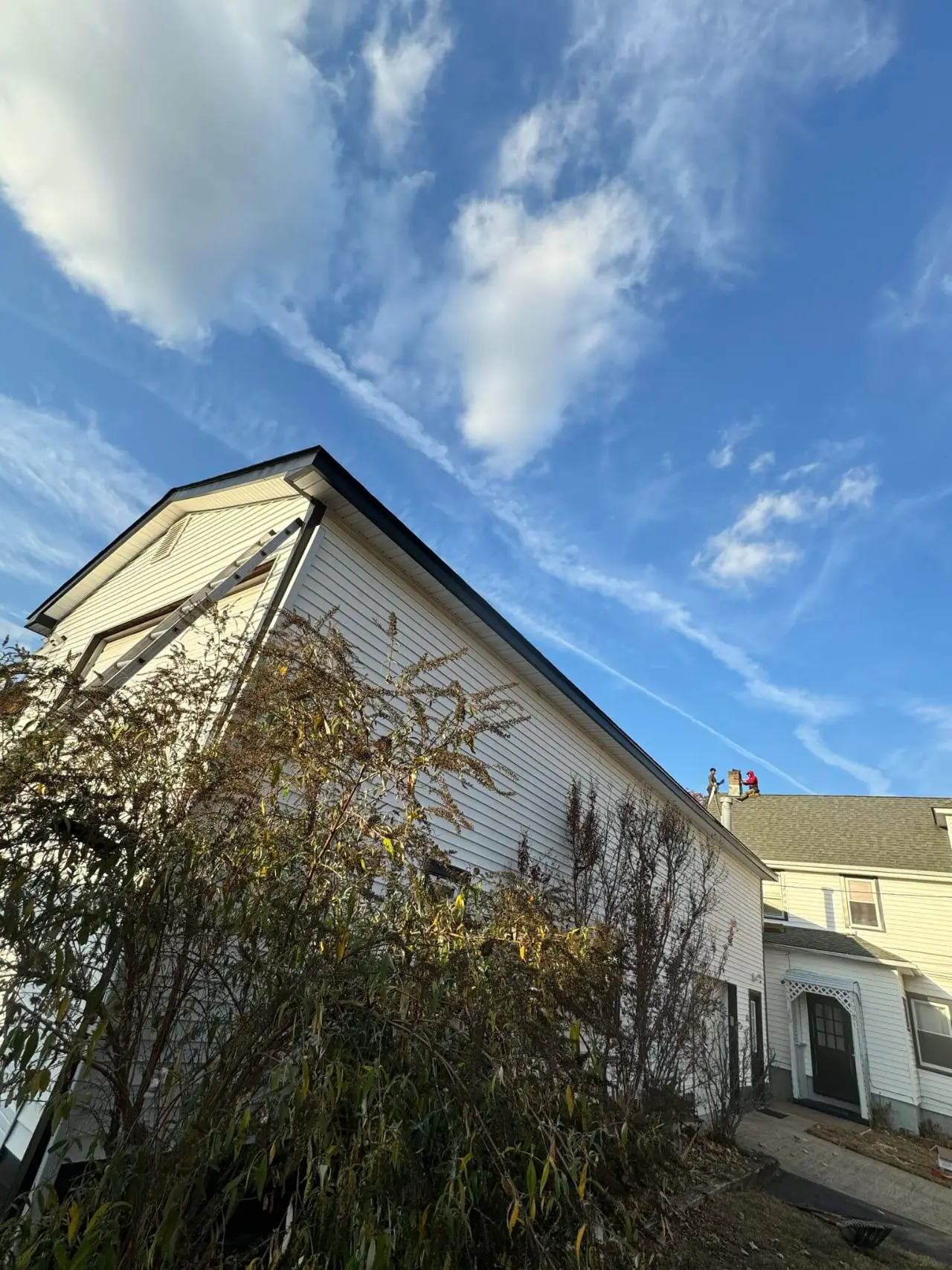
A water stain on the ceiling is never good news. If you’re dealing with a leak, roof leak repair in New Jersey starts with one question. Where is the water actually getting in? The answer isn’t always obvious. Water can enter at one spot and travel along rafters or decking before it shows up inside.
New Jersey weather makes things harder. Heavy snow, ice dams, nor’easters, and summer thunderstorms all test a roof in different ways. A small weak point that held up a long time can fail after one bad storm.
In this guide, we’ll walk through the most common causes of roof leaks on New Jersey homes. You’ll learn what each problem looks like and what you can safely check from the ground. You’ll also see when it’s time to call a roofer. Catching a leak early almost always means a smaller, simpler repair. Waiting usually means wet insulation, stained drywall, and a bigger bill.
Failed Flashing Around Chimneys, Vents, and Skylights
Flashing is the metal that seals joints where your roof meets a chimney, wall, vent pipe, or skylight. It’s one of the most common leak sources on any roof. Over time, flashing rusts, lifts, or loses the sealant that holds it tight. Once a gap opens, rain runs straight into the roof deck. Leaks from flashing often show up as stains on the ceiling near a chimney or skylight. You might also notice damp spots high on a wall. From the ground, check whether the metal around the chimney base looks bent or rusted. The fix usually means replacing the flashing and tying it back into the shingles. In most cases, the rest of the roof can stay.
Missing, Cracked, or Curling Shingles
Shingles are your roof’s first layer of defense. When they crack, curl, or blow off in high winds, the layers underneath get exposed. Underlayment can handle some water briefly, but it isn’t built to be the main barrier. After a storm, walk around your property. Shingles in the yard or bare patches on the roof mean trouble. Curling edges and lots of granules in the gutters are signs the shingles are wearing out. A few damaged shingles can usually be replaced on their own. Widespread curling or cracking over the whole roof is a different story. It often points to a roof near the end of its life, and patching it won’t hold up long.
Ice Dams and Clogged Gutters
In New Jersey winters, ice dams cause leaks that many homeowners don’t expect. Heat from the attic melts snow on the roof. The water runs down and refreezes at the colder edge, forming a ridge of ice. More meltwater backs up behind it and gets pushed under the shingles. Clogged gutters make this worse because the water has nowhere to go. Ice dam leaks usually show up along exterior walls or near the eaves, often in late winter. Keeping gutters clear helps in the short term. The lasting fix involves proper attic ventilation, good insulation, and an ice and water shield along the roof edge. Those details keep the roof surface cold so snow doesn’t melt and refreeze.
When to Call a Roofer About a Leak
Some leaks are easy to spot, but many aren’t. If you see a stain, dripping water, or damp insulation in the attic, it’s time to get the roof checked. Don’t climb onto a wet or steep roof to look around. It isn’t worth the risk. A professional inspection traces the water back to where it actually enters, which may be far from the stain. Once the source is clear, you’ll know whether a simple repair will do or a bigger fix is needed. At Jersey Elite Roofing, we handle roof leak repair on homes and commercial buildings in New Jersey. Every visit starts with a free estimate, so you know the scope and cost before any work begins.
Frequently Asked Questions
How do I find where my roof is leaking?
Start in the attic with a flashlight. Wet wood, stains, or damp insulation point you toward the leak. Water often travels before it drips, so the source may sit higher up the roof. A roofer can trace it to the exact entry point.
Can a roof leak be fixed without replacing the roof?
Yes, most of the time. Failed flashing, a few missing shingles, or a worn pipe boot can all be repaired on their own. Replacement only makes sense when the damage is widespread or the roof is worn out.
Is a small roof leak something I can ignore?
It’s not. Even a slow leak can soak insulation, rot the decking, and lead to mold. Get it checked as soon as you can, before the next storm makes it worse.
Why does my roof only leak during heavy rain?
That usually points to a weak spot that only lets water in under heavy flow or wind-driven rain. Flashing, valleys, and lifted shingles are the usual suspects. An inspection after a storm helps find the source.
Why does my roof leak in winter but not in summer?
Winter-only leaks are often caused by ice dams. Melting snow refreezes at the roof edge and pushes water under the shingles. Better ventilation, insulation, and clear gutters help prevent it.