If you’re planning a new roof, there’s a good chance someone has asked whether the gutters should go too. It’s a fair question. Gutter replacement in New Jersey isn’t always needed during a roof project. Sometimes, though, doing both at once saves time, money, and future headaches.
Your roof and gutters work as one system. The roof sheds water, and the gutters carry it away from your siding and foundation. When one part fails, the other usually suffers. Old gutters can also get damaged when the roof edge is removed and rebuilt.
The right answer depends on your gutters’ age, condition, and drainage. It also depends on what’s happening at the roof edge. In this article, we’ll explain how gutters and roofs connect and when replacing both makes sense. We’ll also cover when your current gutters can stay. Finally, we’ll explain why timing both projects together makes the job easier.
How Gutters and Your Roof Work Together
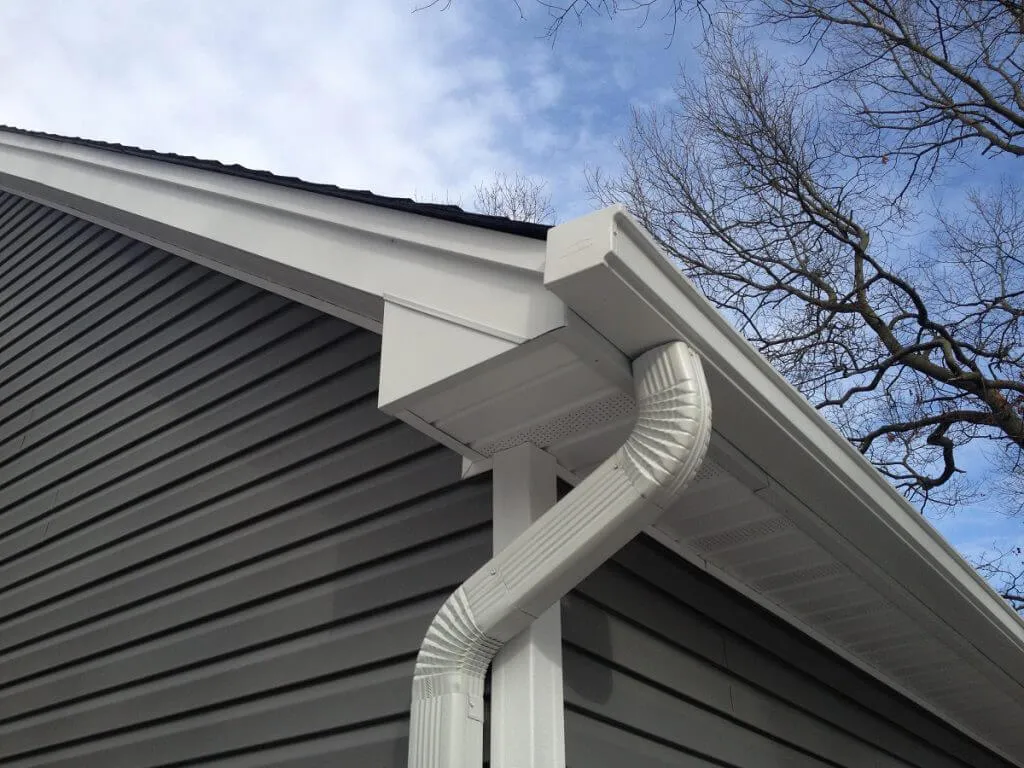
Water leaves your roof at the edge, where the drip edge guides it into the gutter. From there, the gutter carries it to downspouts that move it away from the house. If any part of that chain fails, water ends up where it shouldn’t. Gutters that sag or pull away let water run behind them and soak the fascia. Clogs cause overflow that splashes against siding and pools near the foundation. In winter, trapped water freezes and adds to ice dams along the roof edge. A new roof can’t do its job well if the gutters below it aren’t draining properly. That’s why roofers look at both during an estimate.
When It Makes Sense to Replace Both
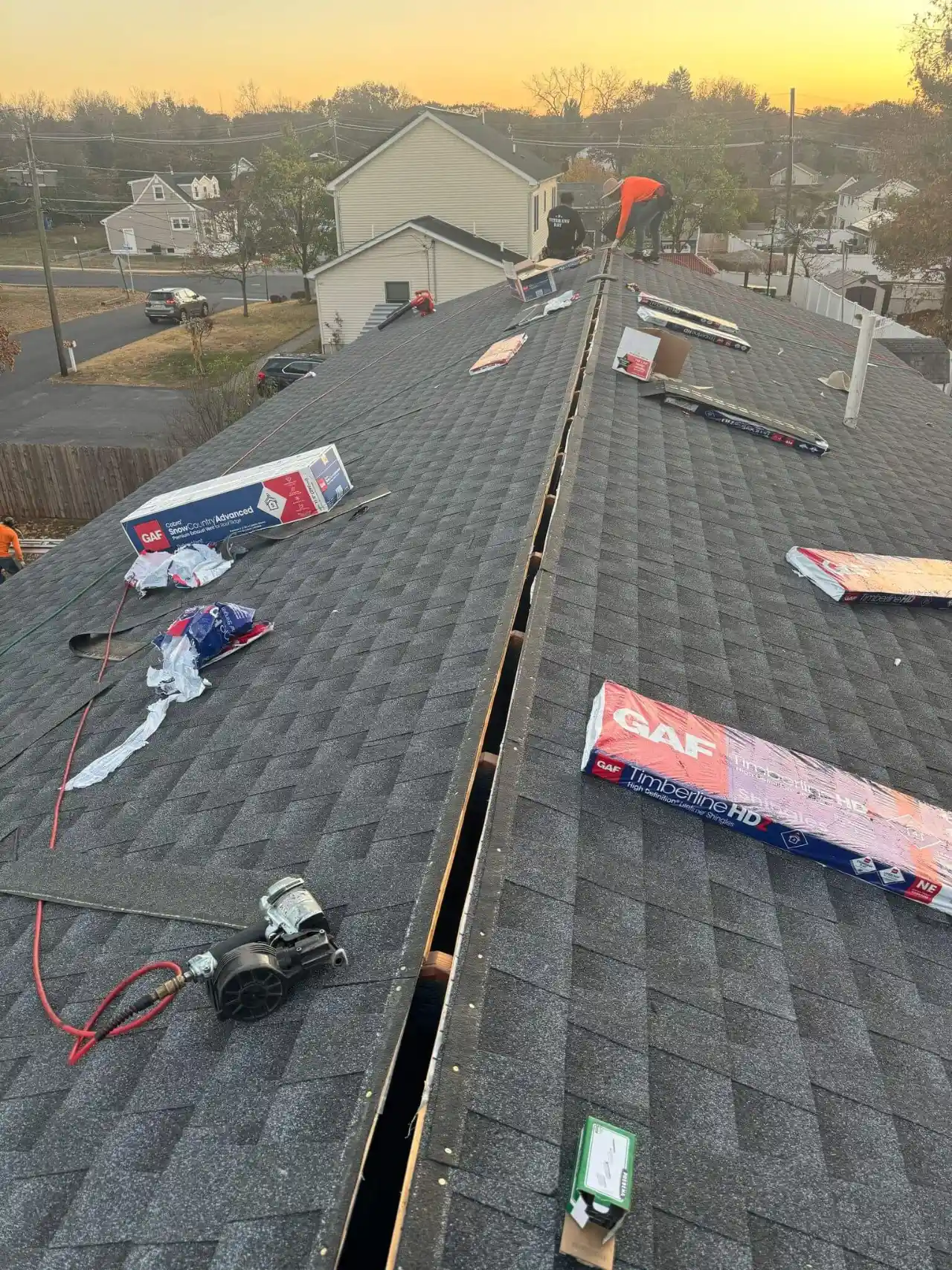
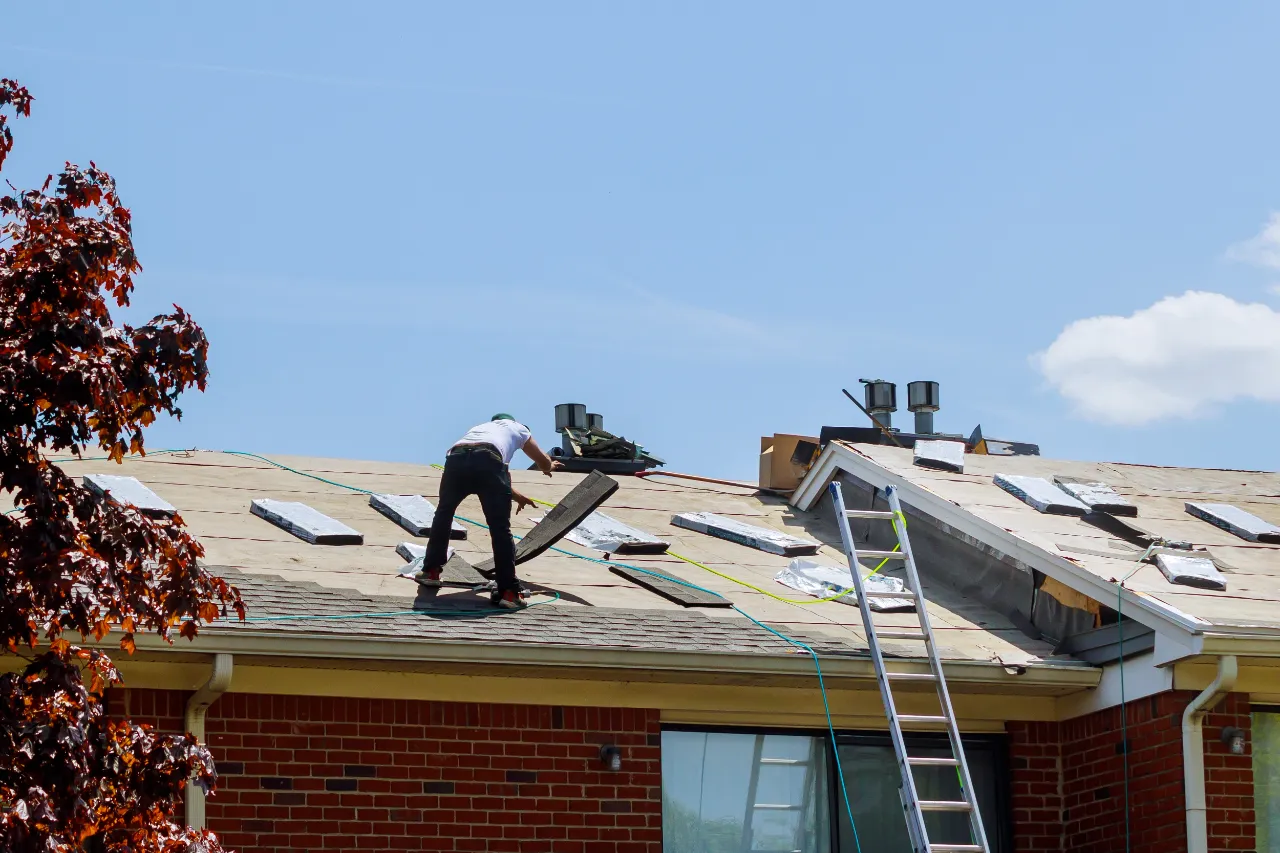
Gutters that sag, rust, or leak at many seams should usually be replaced along with the roof. The same is true of gutters that keep pulling away from the fascia. Removing old gutters is often part of a roof replacement anyway, especially when the drip edge and fascia need work. Putting worn gutters back up on a brand-new roof doesn’t make much sense. Doing both at once also lets the crew install the drip edge and gutters as one system. The pitch, hangers, and outlets get set correctly from the start. You end up with a roof edge that’s sealed and draining the way it should.
When Your Existing Gutters Can Stay
Not every roof project needs new gutters. If your gutters are straight, solid, and draining well, they can often stay. Minor issues like a loose hanger or a leaking seam can be repaired without replacing the whole system. The key is checking how the gutters handle water during a real rainstorm. Overflow, drips at the seams, and water pooling near the foundation are all warning signs. If everything moves to the downspouts cleanly, your gutters are probably doing their job. During the roof estimate, a roofer can also check the fascia behind the gutters. Solid fascia and good drainage usually mean your current gutters can stay in place.
Why Timing Both Projects Saves Hassle
Scheduling the roof and gutters together means one crew, one timeline, and one contractor to deal with. You avoid having a gutter company remove and reinstall parts of a new roof edge later. You also avoid a second round of ladders, debris, and noise around the house. When the same crew handles both, the drip edge, fascia, and gutters get planned together. Problems at the roof edge get fixed once instead of being patched by two different teams. At Jersey Elite Roofing, we handle roofing and gutters, so we can look at both during one visit. You get one estimate that covers the whole roof edge.
Frequently Asked Questions
Do I have to remove gutters to replace a roof?
Not always, but it’s common. Gutters often come down when the drip edge or fascia needs work. If they’re in good shape, they can be reinstalled afterward.
How do I know if my gutters need replacing?
Sagging sections, rust, splits, leaks at many seams, and gutters pulling away from the house are the main signs. Repairs keep working only while the gutters are still solid.
Can new gutters help prevent ice dams?
Clear, properly pitched gutters help meltwater drain instead of refreezing at the roof edge. Ventilation and insulation still matter most, but good gutters do their part.
Is it cheaper to replace gutters and roof at the same time?
It often saves money and hassle because the crew is already working at the roof edge. You avoid paying twice to remove and rebuild the same area.
What happens if I keep old gutters on a new roof?
If they drain well, nothing bad. If they leak or overflow, water can damage the new fascia, siding, and foundation. You’ll likely replace them soon anyway.